
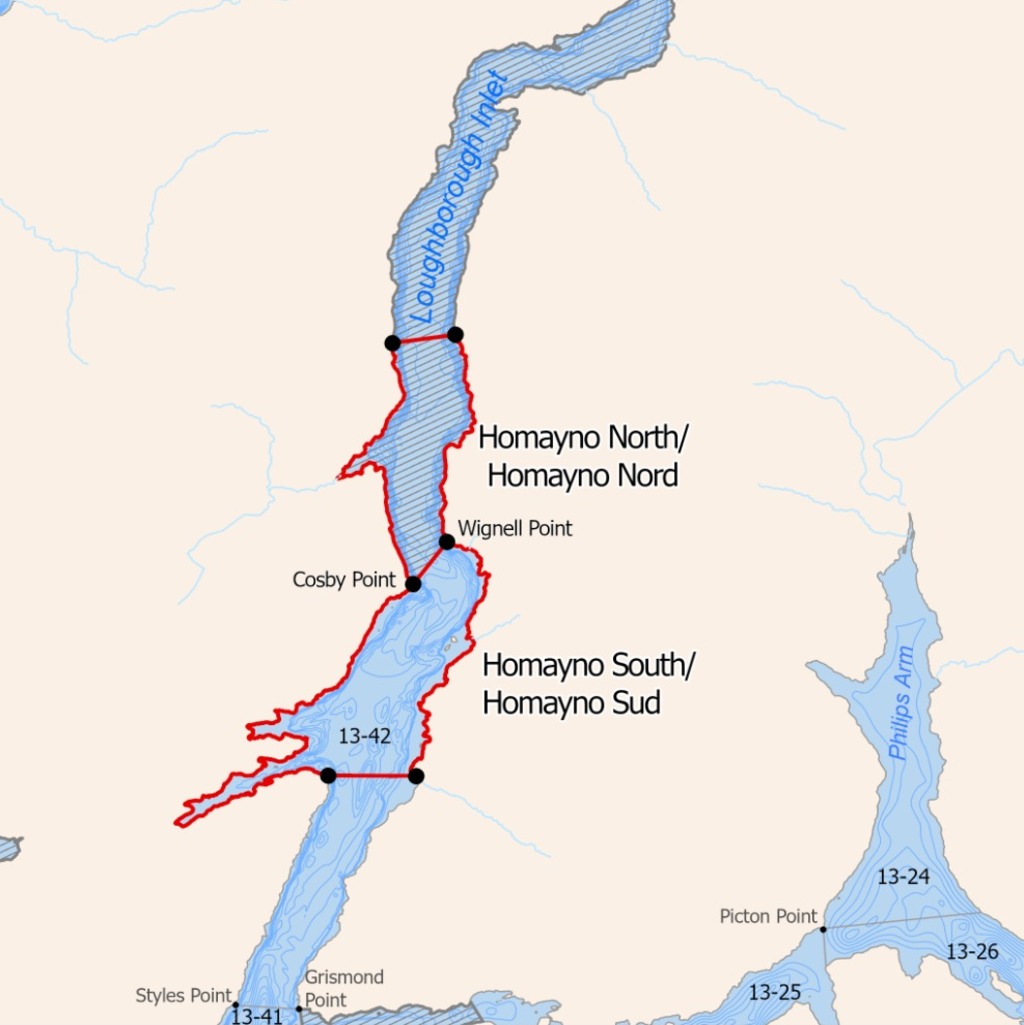
The site is of high cultural and spiritual importance to the Wei Wai Kum, and other local First Nations. The area is home to over thirty documented archaeological sites, including ancient village sites. It continues to be used for traditional food harvest and cultural practices with the Nation focusing on restoration of species and habitats.
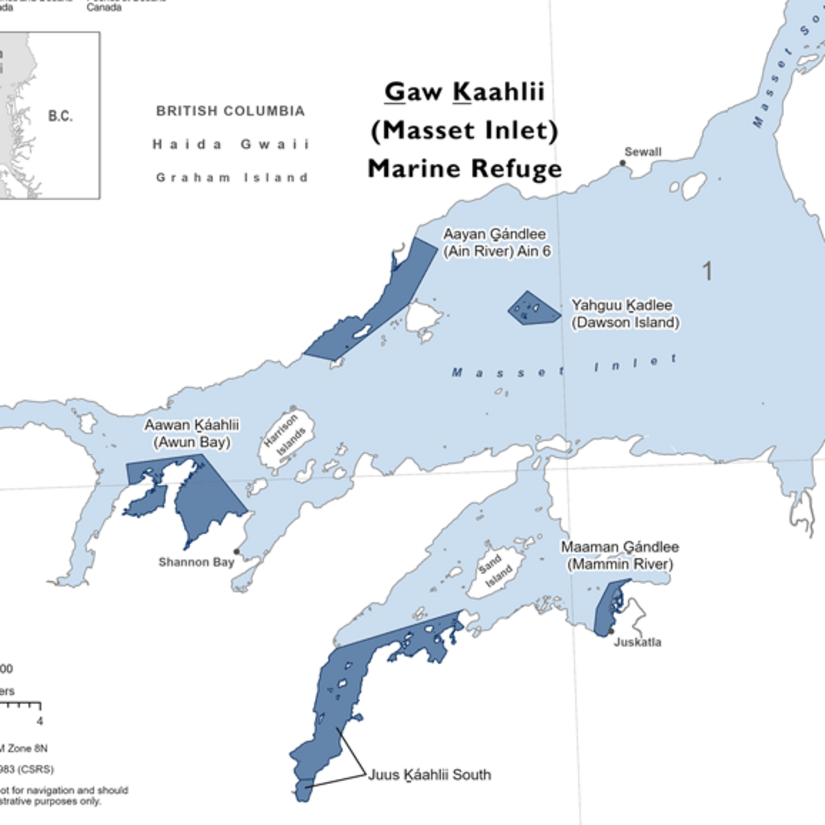
Coral fans create dense thickets that offer vital refuge for fish species. These delicate cold-water corals, along with eelgrass beds and kelp forests, provide essential habitat, food, and nursery grounds for aquatic life.
The shallow sill on the British Columbia coast is a unique habitat with specific characteristics that pose risks to vulnerable organisms from all fishing gear types.
Prohibiting all fishing protects these fragile ecosystems and the critical services they offer to various aquatic species, including rockfish, salmon, crabs, and prawns.
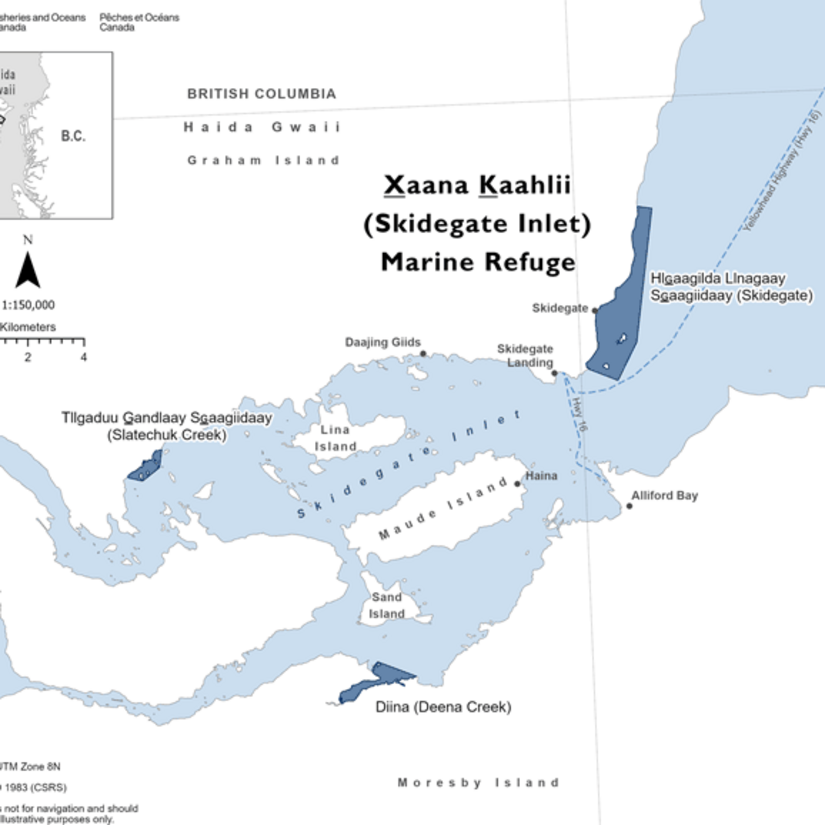
X̲aana K̲aahlii (Skidegate Inlet) is one of the first three marine refuges established under the Northern Shelf Bioregion Marine Protected Area Network Action Plan (NAP).
This marine refuge plays a vital role in conserving a diverse array of species, populations, and ecological communities, including those of significance to the Haida Nation. It is essential for the protection of critical species and ecosystems such as kelp, eelgrass, and estuaries, which are crucial for the life cycles of many ecologically and culturally significant species. Safeguarding these areas will enhance the resilience of these habitats to withstand various stressors, including climate change.
X̲aana K̲aahlii (Skidegate Inlet) also supports vital eelgrass beds and serves as important habitat for migratory bird species and nesting sites for numerous marine birds.
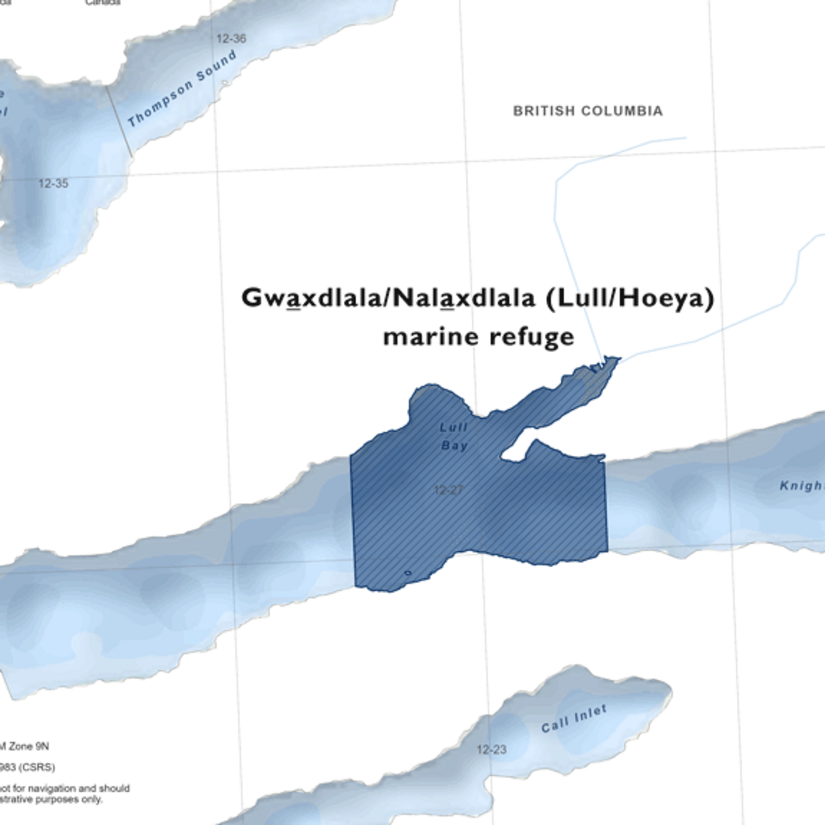
Coral fans create dense thickets that offer vital refuge for fish species. These delicate cold-water corals, along with eelgrass beds and kelp forests, provide essential habitat, food, and nursery grounds for aquatic life.
The shallow sill on the British Columbia coast is a unique habitat with specific characteristics that pose risks to vulnerable organisms from all fishing gear types.
Prohibiting all fishing protects these fragile ecosystems and the critical services they offer to various aquatic species, including rockfish, salmon, crabs, and prawns.
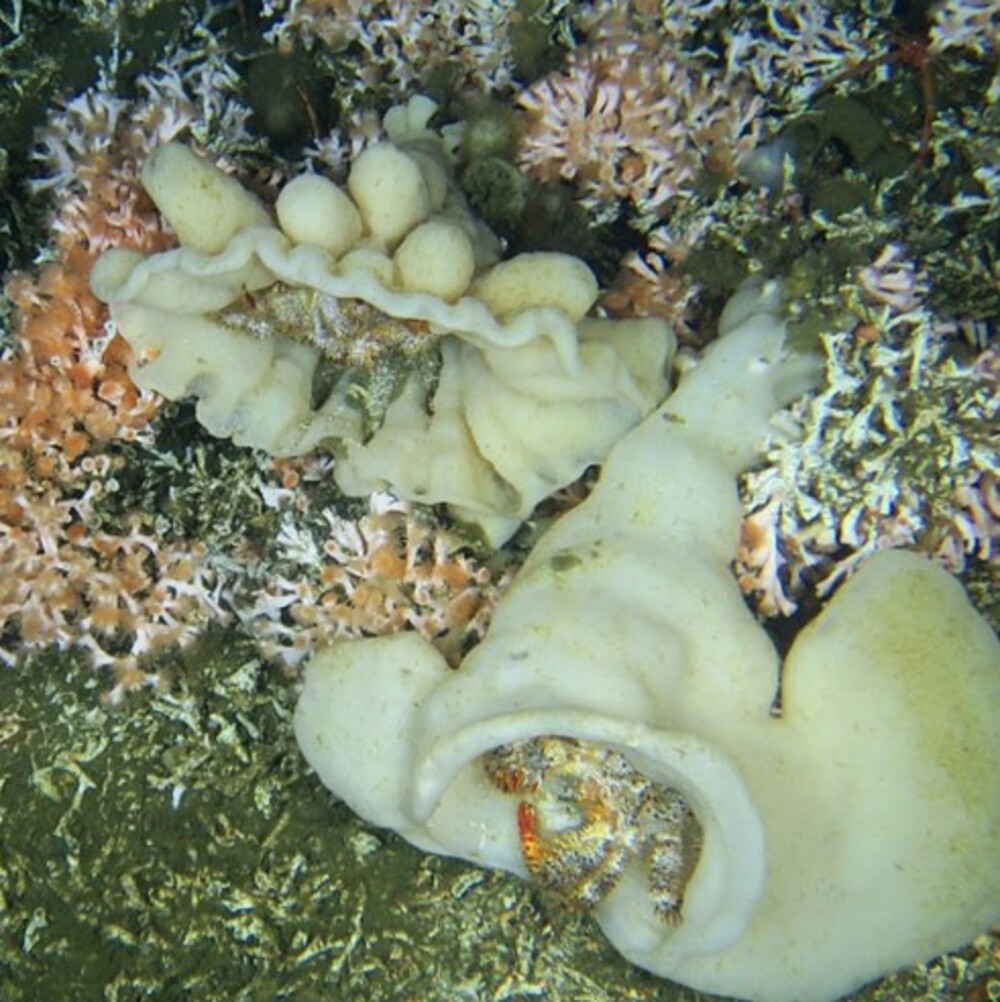
Located in Finlayson Channel, northern B.C., the largely pristine cold-water live coral reef contains unique habitats, high biodiversity and biomass, and has cultural significance to the Kitasoo Xai’xais and Heiltsuk First Nations. Protecting Lophelia Reef aligns with DFO’s priorities of reconciliation and the protection of sensitive benthic areas. The closure demonstrates a robust protective measure by the Department based on a significant scientific discovery as this site, while small, is a globally unique reef that is highly susceptible to damage, most notably from fishing gear.
The Pacific Lophelia coral reef is identified within the Northern Shelf Bioregion Marine Protected Area’s Network Action Plan, and is a proposed Parks Canada National Marine Conservation Area Reserve (NMCAR), which is currently in the feasibility assessment stage.
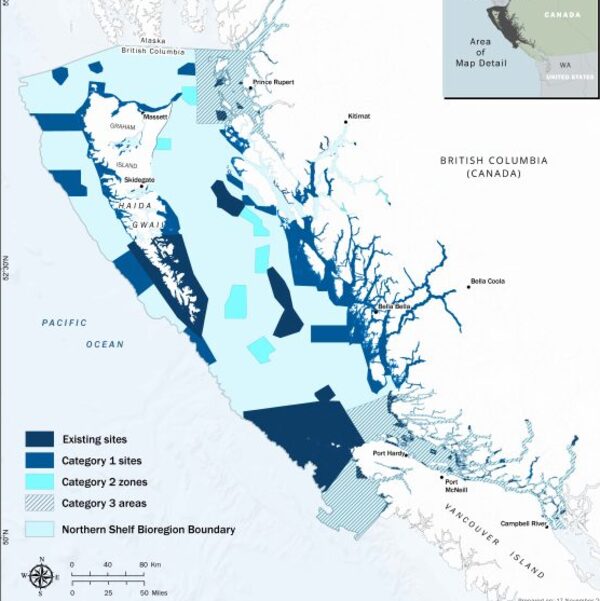
The MPA Network aims to achieve significant conservation and economic outcomes while placing high protection and restrictions on only 6% to 15% of the Great Bear Sea region.
The design strategies from the Network Action Plan recommend that 20% to 50% of the Network be captured in areas of high protection.
DFO. 2023. Proceedings of the Pacific regional peer review on the proposed monitoring framework for SG̲aan K̲inghlas-Bowie Seamount Marine Protected Area, British Columbia, Canada; May 3-5, 2022. DFO Can. Sci. Advis. Sec. Proceed. Ser. 2023/003.
Curtis, L. J. F. and Leus, D. 2022. Experimental harvest of Red Sea Urchins,
Mesocentrotus franciscanus [A. Agassiz, 1863], and trends in Red, Green (Strongylocentrotus droebachiensis; [Des Moulins, 1837]) and Purple (S. purpuratus;
[Stimpson, 1857]) Sea Urchin populations within the Tofino research area (1994-2012).
Can. Manuscr. Rep. Fish. Aquat. Sci. 3244: xi + 57 p.
Leus, D., W. Hajas and J. Lochead. 2017. Survey methods for Red Sea Urchin (Strongylocentrotus franciscanus) populations on submerged reefs: a case-study using the Tree Nob Group, British Columbia, 2007. Can. Tech. Rep. Fish. Aquat. Sci. XXXX: vi + 22 p.
Lochead, J., Hajas, W., and Leus, D. 2015. Calculation of mean abundance in the Red Urchin Analysis Program and Green Urchin Analysis Program. Can. Manuscr. Rep. Fish. Aquat. Sci. 3065: vi + 41 p.
DFO. 2014. Stock status update and quota options for the Green Sea Urchin (Strongylocentrotus droebachiensis) fishery in British Columbia, 2013-2016. DFO Can. Sci. Advis. Sec. Sci. Resp. 2014/052.
Leus, D., Campbell, A., Merner, E., Hajas, W.C., and Barton, L.L. 2014. Framework for Estimating Quota Options for the Red Sea Urchin (Strongylocentrotus franciscanus) Fishery in British Columbia Using Shoreline Length and Linear Density Estimates. DFO Can. Sci. Advis. Sec. Res. Doc. 2013/094. vi + 68 p.
Leus, D., Hajas, W., and Hand, C.M. 2012. Dockside validation methods for the live-market red sea urchin fishery in British Columbia. Can. Tech. Rep. Fish. Aquat. Sci. 3003: iv + 12 p.
Zhang, Z., Campbell, A., Leus, D., & Bureau, D. (2011). Recruitment patterns and juvenile–adult associations of red sea urchins in three areas of British Columbia. Fisheries Research, 109(2), 276-284.
Maldonado, Maria T., Andrew E. Allen, Joanne S. Chong, Kevin Lin, Dan Leus, Nataliya Karpenko, and Shannon L. Harris. Copper-dependent iron transport in coastal and oceanic diatoms. Limnol. Oceanogr., 51(4), 2006, 1729-1743
Leus, D. Techniques in Habitat Modelling for Stock Assessment in Canada’s Pacific Red Sea urchin Commercial Fishery. 2012. 104th Annual Meeting, National Shellfisheries Association, Seattle, Washington.
Maldonado, M. T., Allen, A. E., Chong, J. S., Lin, K., Leus, D., Karpenko, N.. Copper-Dependent Iron Transport in Iron-Limited Marine Diatoms. 2005. ASLO Summer Meeting, Santiago de Compostela, Spain.
Maldonado, M., J. Chong, N. Karpenko and D. Leus. The role of Cu in the high affinity Fe transport system of marine diatoms. 2004. Ocean Research Conference, Honolulu, HI, USA
Maldonado, M., N. Karpenko and D. Leus. The role of Cu in the high affinity Fe transport system in marine phytoplankton. 2003. Center for Environmental Bioinorganic Chemistry Workshop, Princeton, N.J., USA
Leus, D. The Role of Copper in Extracellular Iron Oxidation in Thalassiosira oceanica. 2003. Honours thesis B.Sc.. UBC.